Create a Backyard Compass

Jay Ryan • May 6, 2026

The ORIGINAL Classical Astronomy Backyard Compass!  Often Imitated, Never Duplicated! 

These are the instructions for the ORIGINAL Classical Astronomy Backyard Compass, first published in our Signs & Seasons curriculum in 2007 and in the companion Field Journal in 2008.  The Backyard Compass has proven to be a very useful and popular activity... so much so that it has been bootlegged by many (who didn't even bother to give it their own name!)  A Backyard Compass is an indispensible tool for learning the cycles of the Sun, Moon, stars and planets, especially for the purpose of natural timekeeping and navigation from these celestial bodies.  Let's get started!


Create a Backyard Compass


Necessary materials:

Some sticks, a tape measure, and five paving stones from a garden supply center.


This is a very important project that will be used throughout the field activities. You will make a compass that is big enough to stand on, as shown in the book. This will help you find direction
and learn to orient yourself as you learn the constellations and signs of the seasons.


The first thing you need to do is find “high noon,” when the Sun is highest in the sky and the shadows are the shortest. As Pliny the Elder instructed in A.D. 50:


After observing the quarter in which the Sun rises on any given day, at the sixth hour of the day (i.e. at Noon) take your position in such a manner as to have the point of the Sun’s rising on your left; you will then have the south directly facing you, and the north at your back: a line drawn through a field in this direction is called the “cardinal” line... It will be the sixth hour of the day, at the moment when the shadow straight before him is the shortest. Through the middle of this shadow, taken lengthwise, a furrow must be traced in the ground with a hoe, or else a line drawn with ashes, some twenty feet in length.


So here’s what to do:
* Pick a site in your backyard away from the house and other buildings, with a wide open view in as many directions as possible. (Get your parent’s permission before beginning!)


* Place a stick in the ground about one foot long. Be sure the stick is placed very straight in the ground.


* On a sunny day, observe the shadows from between about 11:00 AM and 2:00 PM (since high noon can occur at very different times depending on the season and your location.)


* Every 20-30 minutes, place a short twig into the ground at the end of the stick’s shadow.


* After the time is up, use a ruler or tape measure to find the distance between each twig and the stick. The shortest distance is your
cardinal line that runs from north to south!
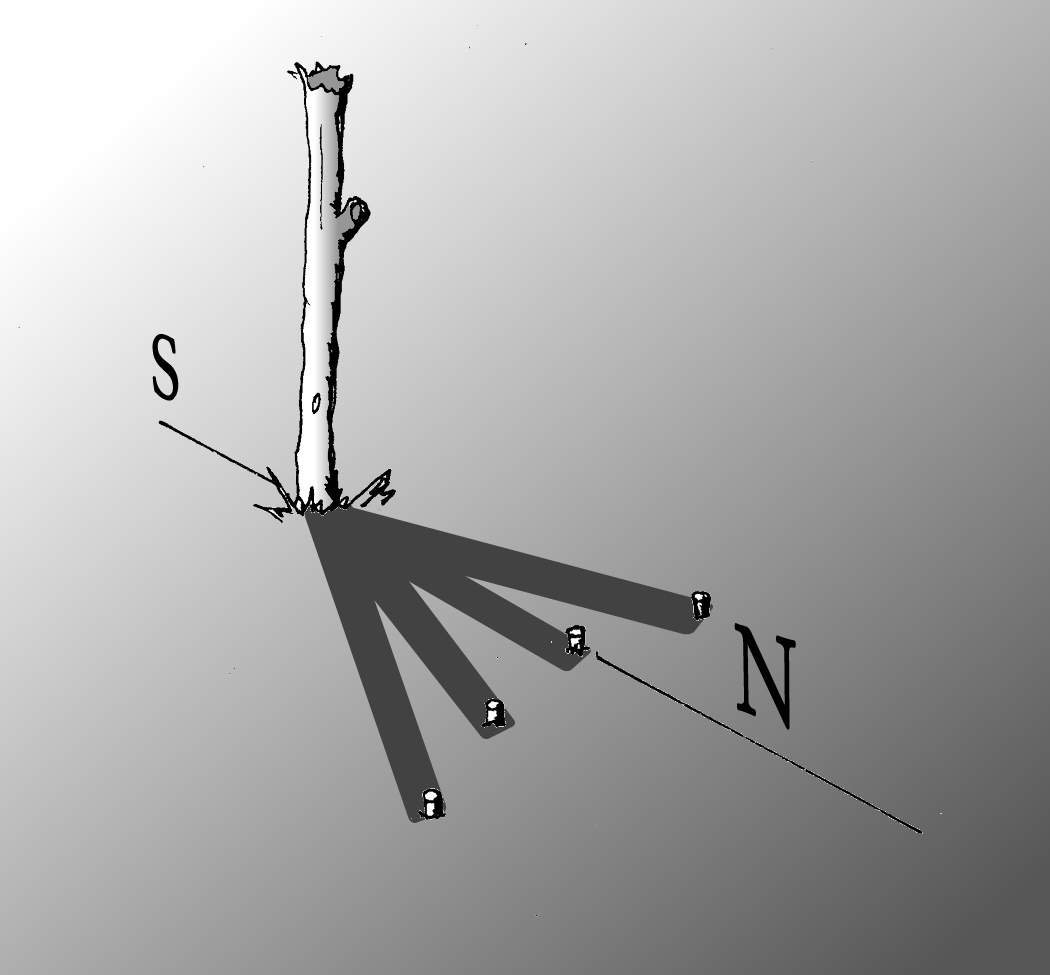
* Carefully extend your cardinal 1ine 10 feet (3 meters) to the north and to the south from your stick. Place paving stones at each point. These are the north and south points of your compass.


* Remove the stick and place a paving stone in its place. This is your central standing stone.


* From your standing stone, measure a line perpendicular to your cardinal line, another 10 feet (3 meters) on either side. Check carefully to make sure your lines are even. Place paving stones at these ends. These are the east and west points of your compass.
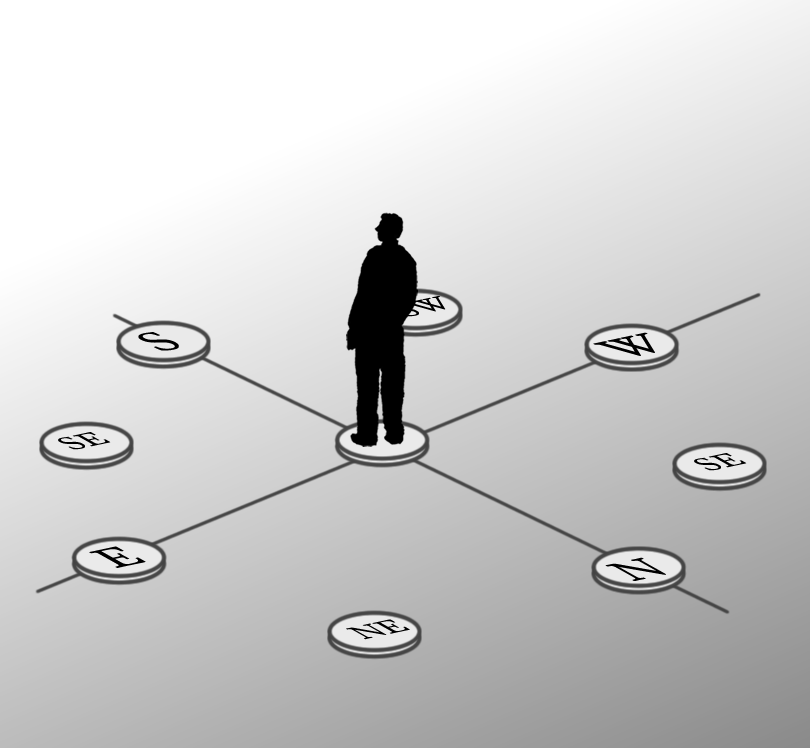
* Recheck your compass over the next two or three days to make sure that the shadows really are shortest in the direction of your cardinal line.


* (OPTIONAL -- Add four more marker stones between the cardinal stones to indicate NE, NW, SE and SW.)


* When your compass is accurate, you can now stand on your standing stone and look at each direction of the compass, day or night and when it’s cloudy!


* You can write the names of the directions on your compass points -- N-E-W-S – help every member of the family find the compass points. Also, you can dig out under your stones to set them in the earth, to make sure the lawn mower won’t hit them.


* If space does not permit, you can create a temporary backyard compass on a driveway or other pavement surface using sidewalk chalk.


For many activities and to learn the cycles of the Sun, Moon, stars and planets, order your copies of Signs & Seasons and the Field Journal


 Make this the year your family studies astronomy!


Please drop us an email to let us know how your Backyard Compass turned out, or if you have any questions!  Thanks, jay
By Jay Ryan May 6, 2026
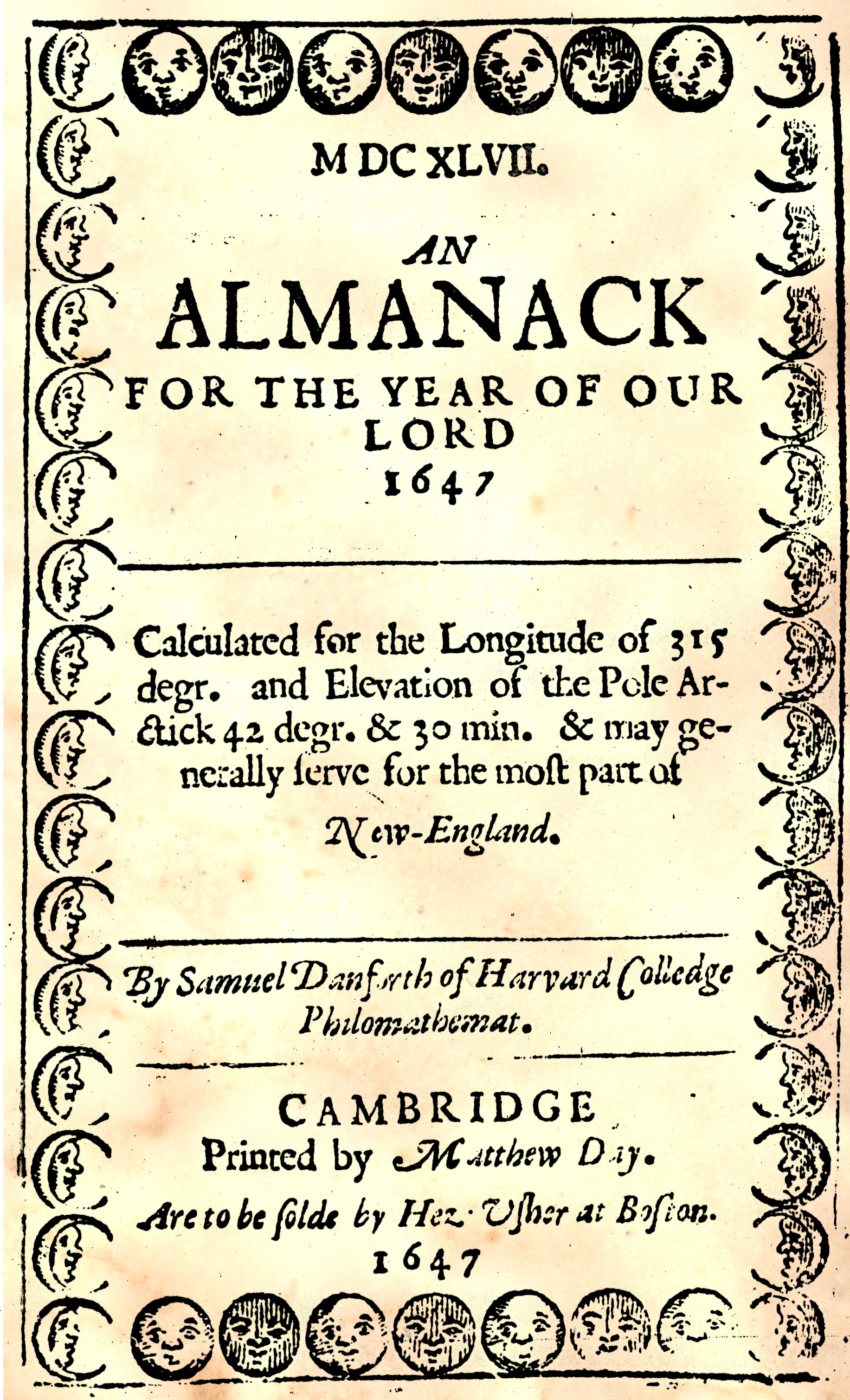
Let's revive the Almanack Tradition, an essential feature of life in Early America
By Jay Ryan July 22, 2025
We all need a little sunshine in our day
By Jay Ryan March 1, 2025
Before You Buy A Telescope
By Jay Ryan March 1, 2025
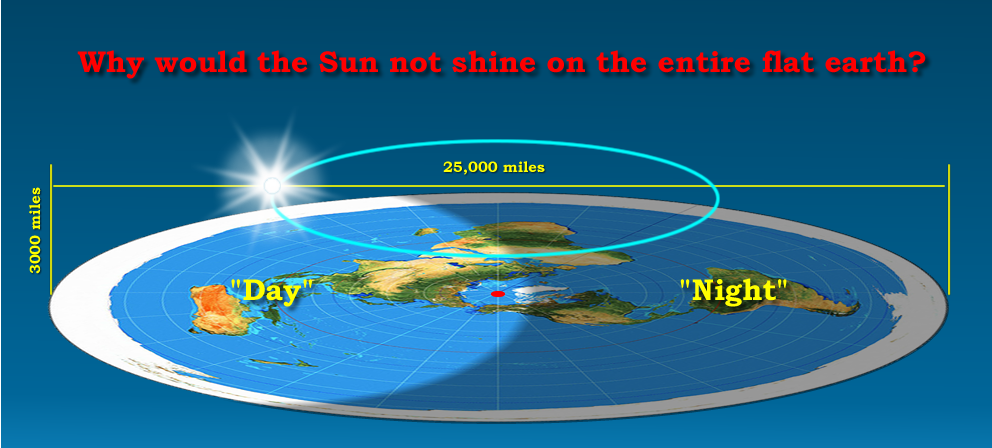
Some Remarks About Flat Earth-ism I continue to get many requests from people wanting me to debunk flat earth-ism. I really dislike this whole subject for many reasons and wish it would just go away. My work is to teach and inform, not argue and contend. I have no taste for debunking anything, but instead am passionate about sharing facts that are not commonly understood, especially all the cool stuff in the sky hiding in plain sight. And while I do believe that flat earth-ism is quieting down lately and no longer spreading like a few years ago, the "true believers" remain undeterred. Flat earth-ism reminds me of this humorous quote from President Ronald Reagan: The trouble with our Liberal friends is not that they're ignorant; it's just that they know so much that isn't so. This is certainly true of our flat earth friends. They contend that there is no evidence that the Earth is really round but they brush aside and dismiss any evidence you try to offer. They say that there are 600 Scriptures that teach a flat earth, but when you read the verses, the picture is not so clear, and these verses do not actually teach what they are purported to teach. These verses certainly do not provide enough information to support the specifics of the flat earth model, as taught on the internet. In the current flat earth model making the rounds nowadays, the Earth is depicted as a flat circle in a literal azimuthal projection like the United Nations map, centered on the North -ole. Somehow, the Sun and Moon float above the Earth and continuously circle overhead, moving back in forth with the seasons. Flat earth-ism teaches that, though the Sun and Moon do not actually rise and set over the horizon, the sunrises and sunsets that we observe are because light does not really move in a straight line but somehow "drops" (or something) when the Sun and Moon are a certain distance away, creating an illusion of rising and setting that perfectly fits with how things would appear if the Earth really were round with light moving in a straight line. When you try to offer a proof that the Earth is a globe, flat earthers usually have a handy "talk-around" to explain it away, whether it be time zones, eclipses, horizon dip, or the coriolis effect. Usually these "talk arounds" do not offer a complete explanation and reveal an inadequate understanding of the topics. The contemporary flat earth internet craze is an extension of the "Apollo hoax," that the spherical Earth is just a NASA conspiracy theory to deceive the public for some reason, failing to grasp how the spherical globe has been known for millennia. Flat earth-ism begins in an honest place. In our culture and the educational establishment, the sphericity of the Earth is handed down on authority in classrooms and in textbooks. Teachers and science promoters never offer proofs or explanations of the Earth's sphericity. One is expected to just swallow the roundness of the Earth as a given fact, sight unseen, and accept that it is true because the "almighty" science establishment says so. We, the unwashed herd, are expected to just shut our stupid mouths and "trust the science" and defer to the superior wisdom of our "betters" in the white lab coats because they are so much smarter than us, just as they also expect us to believe every other aspects of mainstream science handed down on authority with no validation, including darwinism and the covid orthodoxy of 2020. The fact is, people are entitled to explanations as to why modern science understands the Earth to be a globe. People have a right to be distrustful when no explanations are forthcoming. I have long been critical of this status quo, and regret that I still have not had the opportunity to write the books that would provide the proofs that the Earth is a globe in orbit around the Sun. These proofs are really cool but rather deep, and you really need to spend quality time studying the sky to appreciate them, which hardly no one does today. Nonetheless, everyone living in the modern world should take the time to understand these things, even though there is a dearth of good material on the subject. So I'm sympathetic in principle to flat earthers. However, I am not sympathetic towards anyone whose mind is closed and who rejects outright any attempt to offer legitimate explanations. It's a really cool story how we know today that the Earth one of the round planets in our solar system, third from the Sun. If you have a flat earth friend or family member, I'd encourage you to just ask them a lot of questions.... Did you always believe the Earth was flat? If not, what did you learn that persuaded you? What was the source of this information? Did you see these slick computer graphic videos on the web? What is the source of these videos? Who produced them? CGI does not create itself so who paid for these slick videos? Are you aware that there is propaganda on the web sponsored by enemies of the USA, with the intent of deceiving the American populace? Shouldn't that make you skeptical of unsourced information posted on the web? Have you made an effort to be objective and seek out explanations as to why science teaches that the Earth is spherical? Have you noticed legit educational organizations always identify themselves? Have you noticed that they usually have websites, sell products and/or solicit donations? What flat earth organizations do you belong to and how are they funded? In any event, the sphericity of the Earth has been known since the Ancient Greeks, centuries before Christ. The principles of Euclid's geometry were applied to the sky to predict the extreme seasonal daylight at the poles and the reversal of seasons in the southern hemisphere, millennia before these places were visited by explorers. These facts have been widely accepted by almost all Christians across the world over the last 2000 years. The sphericity of the Earth has never been a serious controversy in the Christian church, and has never been a test of Biblical or doctrinal orthodoxy. Down through the centuries, flat earth-ism was only taught by a small number of individual Christians in certain localized places. As explained in Inventing The Flat Earth: Columbus and Modern Historians by Jeffrey Burton Russell , an "urban legend" arose in the 19th century propagated by secular historians that Medieval Christians believed that the Earth was flat. This notion is now debunked by solid evidence. It is acknowledged in modern scholarship today that Christians in Medieval times (and also before and after) understood and accepted the classic proofs of the Ancient Greeks of the sphericity of the Earth. "Belief" in a flat or round Earth is not an option. If we believe that we live in the real world of objective reality, the subject is not open for debate or differing opinions. Either the Earth is round or it is not, for reasons that we should be able to observe and confirm. Our entire edifice of modern science is built upon the physics of Isaac Newton, who established heliocentrism as the central premise of how things work in the cosmos. Newton himself was a devoted Christian who wrote more Bible commentaries than scientific works. Newton's physics offered mathematically precise results, from the movements of bodies on the Earth to the celestial bodies in space, all following the same set of scientific laws. Newton's physics is the basis of all modern science today. If you could somehow remove heliocentrism and the spherical Earth, all science would collapse like a Jenga game. It is most ironic that the popular contemporary deception of flat earth-ism is propagated using 21st century technology via smart phones and the internet. It's rather sad that science education is in such a sorry state that some have uncritically adopted and internalized this debunked urban legend without seeking the facts.
By Jay Ryan September 2, 2024
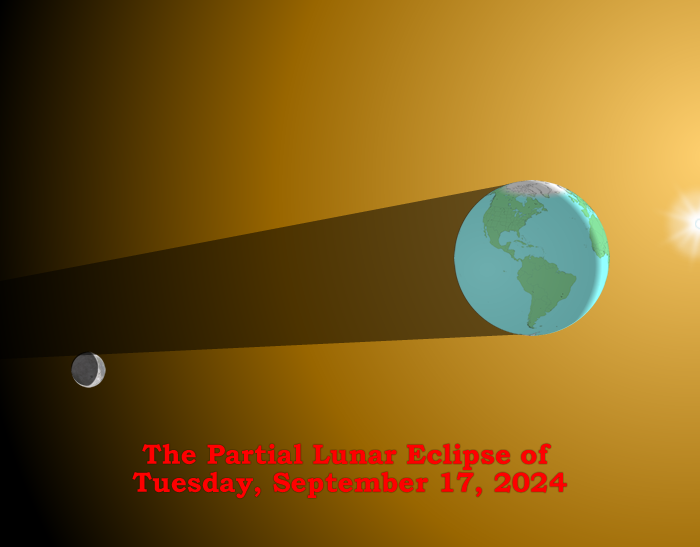
The Next Eclipse Season after the Total Solar Eclipse
By Jay Ryan June 23, 2024
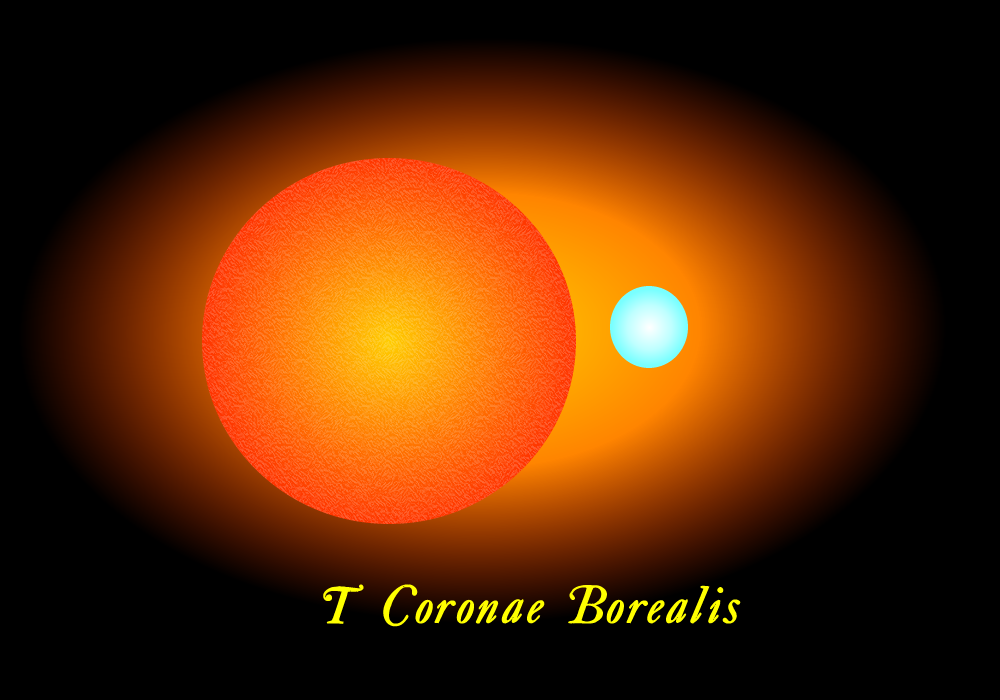
T Coronae Borealis will become visible this summer.